How to Train a New Cleaner So They Actually Stay
Training is where a lot of cleaning businesses quietly lose. They hire someone, hand them a checklist, and move on, then wonder why the quality is inconsistent and people keep quitting. I train very differently, and it is one of the biggest reasons I have been able to keep the team I have. Here is the whole approach.
Hire the attitude, train the skill
This starts before training even begins, at the hire. Most people can be taught how to clean, especially once you have good processes in place. What you cannot teach is work ethic, reliability, and genuinely caring about doing a great job.
So I look at character far more than experience. Someone who shows up on time with a good attitude and a willingness to learn will outperform an experienced cleaner who is just collecting a paycheck. The difference between a good cleaning and a great one is usually the person noticing the little things in a home, and you cannot train someone to care. You hire for it. If you want help thinking through the hiring side, we cover it in When Should You Hire Your First Cleaner.
Set the culture before they touch a home
Before a new hire ever steps into a client’s house, they need to know what you stand for. I make sure every new person understands that we are not just a cleaning company, we are an above-average professional one. We show up on time, we look put together, we smile, and we communicate. That tone is set on day one, and it is set by me, because culture starts at the top and gets reinforced in the small things every single day.
This is also the point to run a background check, before that first home, not after. Clients are trusting you with access to their space, and screening is part of being the professional company you say you are. We use Checkr because results come back in minutes and candidates can finish it from their phone. (Checkr is an affiliate partner, so we may earn a commission if you sign up.)
The training method that builds consistency
Here is the actual sequence I use.
Start in a low-pressure place. A new hire’s first real shift should be somewhere calm where they can work slowly and ask every question they have. For a long time I trained people at my own house for exactly this reason. More recently I set up a weekly client as a training home in exchange for a discount on her cleans, which also gave me a place to film our own training videos. Either way, the point is the same: the first time should not be a high-stakes client home.
Foundational training first. Before they shadow you, give them the basics. Some owners use a program like Maid Training Academy, which walks through how to enter a home, what supplies to use, and what is included in each type of clean, and even offers a certification you can market to clients. As you grow, it is worth filming your own videos so the training carries your specific standards and culture.
Shadow, then side by side. On the first real cleans, they watch. You go room by room and explain everything you are doing, even the things that feel like common sense, like how much water you are using or how you work a sink. Then you flip it. They start cleaning while you watch and correct in real time. After that, they handle rooms on their own while you check every area behind them and answer questions.
Then a window of checking in. I keep checking their work and giving feedback for the first few weeks at least. A lot of owners formalize this as a 90-day period of regular check-ins before fully trusting someone to work solo. The exact timeline depends on the person and how many shifts a week they work.
Do not rush speed
This is the mistake I see most. Owners try to make a brand-new cleaner fast right away, and it is overwhelming and unrealistic. When a trainee is watching you, your pace looks slow and careful, and they think that is the speed they should move at forever.
So teach quality first and let speed come. In my experience, most people figure out efficiency on their own once the quality is solid. If someone is genuinely taking too long, then I step in and we figure out together what they are doing inefficiently. But I never lead with speed. Lead with doing it right.
Use checklists so every clean matches
The thing that keeps quality consistent across different cleaners is a checklist for each type of clean. Without it, one cleaner does an amazing job and the next does a mediocre one, and the client notices. Checklists make training faster, they tell the client exactly what to expect, and they protect your reputation by making sure every home gets the same service. If you have not nailed down what is included in a standard versus a deep versus a move-out, start with Standard vs Deep vs Move-Out Cleaning.
Retention is part of training
Training someone well is wasted if they leave in three months. Cleaning is hard, physical work, and a great boss is most of what keeps good people around.
So I communicate constantly, even when it is uncomfortable, and I recognize good work all the time. That looks like random coffee runs on a Tuesday, holiday bonuses that scale with how long someone has been with me, birthday balloons in the van, and genuine thank-you notes. Last year I got my longest-tenured employee her favorite perfume, and she felt truly appreciated. I also give my best people room to grow into leadership, because if there is no path forward, they will not stay long term.
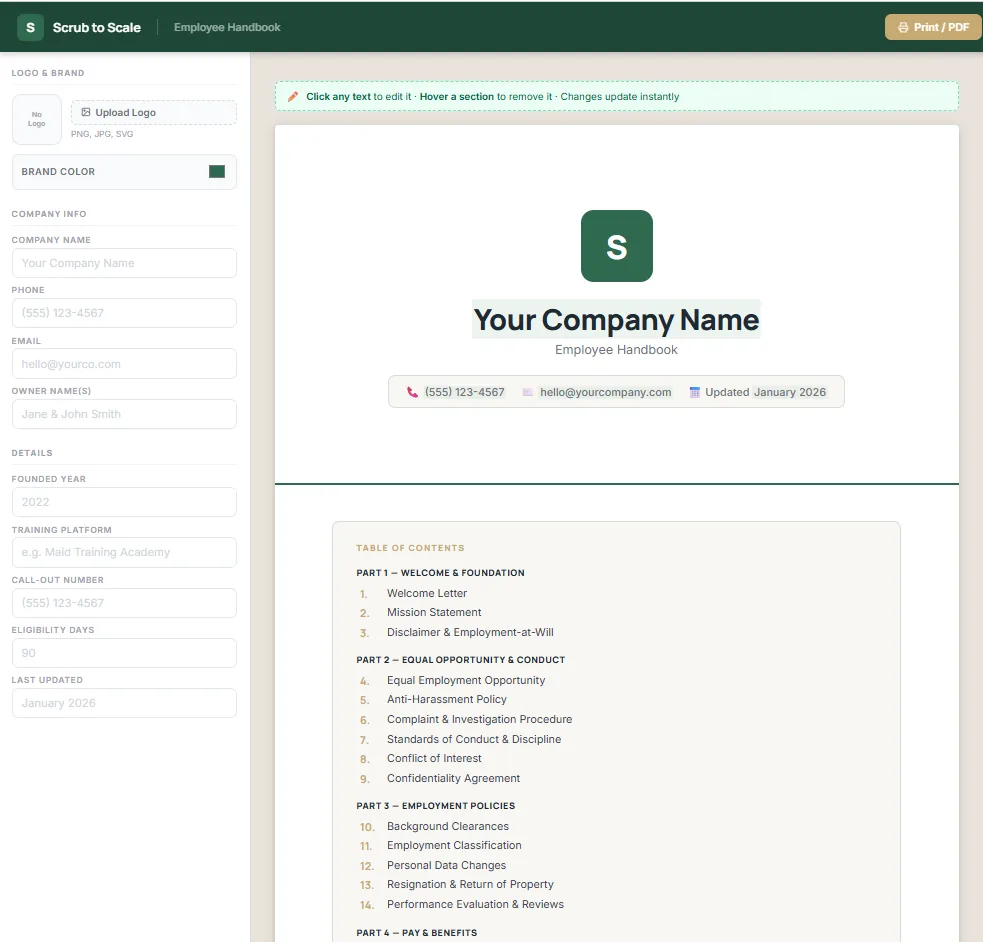
Treat your team well and they will represent your business the way you would yourself. And give them a real day one: the handbook, the call-off policy, and the onboarding checklist my new hires sign are all in my hiring bundle, in your branding, so training starts from a standard instead of a scramble. Scrub smarter, scale harder.
Frequently asked questions
Should I hire cleaners for experience or attitude?
Attitude, almost every time. You can teach someone how to clean, especially with good systems in place, but you cannot teach work ethic, reliability, or genuinely caring about the client. Hire the right person and train the skill.
How long does it take to train a new cleaner?
It varies by person and by how many shifts a week they work, but plan on being hands-on for at least the first few weeks, then checking their work for a while after. Many owners use a 90-day window of regular feedback before fully trusting someone solo.
How do I train a cleaner without slowing my whole day down?
Use a low-pressure first shift, at your own home or a flexible recurring client's home, so they can work slowly and ask questions. Do not push speed early. Efficiency comes on its own once the quality is there.
How do I keep new cleaners from quitting?
Communicate constantly, recognize good work often, pay well, and give your best people a path to grow. Cleaning is hard, so being a positive, organized boss is most of what keeps good cleaners around.